中国日报网、吉林英文网等媒体报道全国人大代表秦和校长履职建言
会通中外 砺志敦材3月6日,中国日报网、澎湃新闻报道了全国人大代表秦和校长关于办好乡村教育的建议。
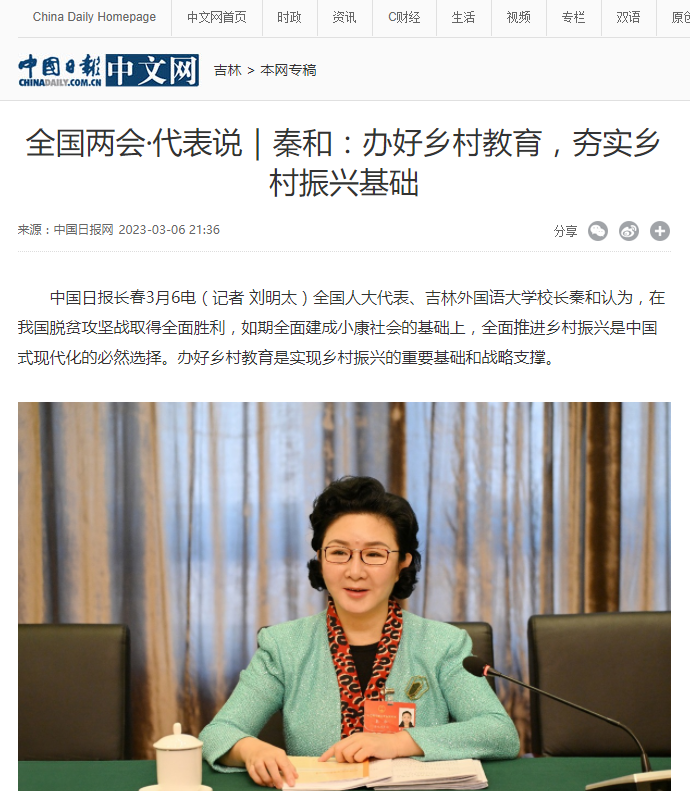
全国两会·代表说|秦和:办好乡村教育,夯实乡村振兴基础
中国日报长春3月6电(记者 刘明太)全国人大代表、吉林外国语大学校长秦和认为,在我国脱贫攻坚战取得全面胜利,如期全面建成小康社会的基础上,全面推进乡村振兴是中国式现代化的必然选择。办好乡村教育是实现乡村振兴的重要基础和战略支撑。秦和代表介绍,现在我国乡村学校的办学条件已经得到大幅改善,各地校园面貌焕然一新,乡村教师总量不足、学生寄宿条件紧缺等突出矛盾已经得到了较好解决。在许多边远乡村,校舍是当地最好建筑,成为一道道靓丽风景。但秦和代表也坦言,由于受到多种因素影响,我国的乡村教育仍面临诸多问题,一是乡村教育质量整体有待提高;二是乡村教育资源在一些地方出现闲置;三是乡村教育治理还跟不上。鉴于乡村教育的极端重要性以及当下一些地方乡村教育所面临的困境,秦和代表就办好乡村教育夯实乡村振兴基础,在今年的全国两会上提出以下建议:第一,着眼党和国家事业发展全局办好乡村教育。要将办好乡村教育作为乡村振兴的一项基础性、战略性工作,国家、省、市、县各级出台的乡村振兴规划和教育事业发展规划及相关政策文件,都应体现优先支持乡村教育发展。各级财政对教育的投入,应优先考虑解决乡村教育面临的突出问题。对地方各级党政部门的政绩考核以及乡村振兴工作考核、对政府履行教育职责情况的考核评价,应将乡村教育发展情况作为重点。第二,着力盘活乡村闲置教育资源。乡村校舍的闲置,不仅造成教育资源的极大浪费,还影响到当地群众对乡村教育的信心。这种状况应当尽快改变。建议国家有关部门牵头,对乡村校舍的闲置情况进行全面摸底。在此基础上,区分不同情况,统筹制定合理利用方案。优先考虑用于改善教师工作和生活条件。第三,大力加强乡村教师队伍建设。对乡村教师现状进行全面摸底。对不具备教学能力的教师,采取适当方式,及时有序作出调整。对担任教学工作的乡村教师,加强需求导向、问题导向的培训,帮助广大教师解决教育教学中面临的实际问题,全面提升乡村教师队伍的教学能力。创新乡村教师编制管理,赋予一定弹性,加大编制统筹力度,加快解决结构性紧缺问题。依法保障乡村教师待遇,对在边远地区工作的乡村教师,加大补贴力度,吸引更多的优秀人才在乡村学校长期从教。第四,加强乡村学校管理队伍建设。结合乡村教育的特点,进一步明确乡村学校校(园)长的任职标准,对其履职尽责提出明确要求。加强乡村学校校(园)长培训,在强化培训的针对性实效性上下功夫,全面提升校(园)长办学治校的能力。通过各种渠道,及时发现、培养、储备乡村教育优秀人才,适时补充到乡村学校管理队伍。尤其要加强中心校管理队伍建设,在选好配好书记、校长上下功夫,着力办好中心校,发挥好中心校对乡村教育的辐射带动作用。第五,完善乡村教育管理制度。对乡村学校的财务管理、教研管理、教师管理等各方面制度进行全面评估,结合乡村发展和乡村教育的最新情况,及时作出调整和优化,使其更加符合实际。通过相关管理制度的不断完善,切实激发乡村教育的活力。
3月6日,吉林英文网报道了全国人大代表秦和校长关于办好乡村教育的建议。
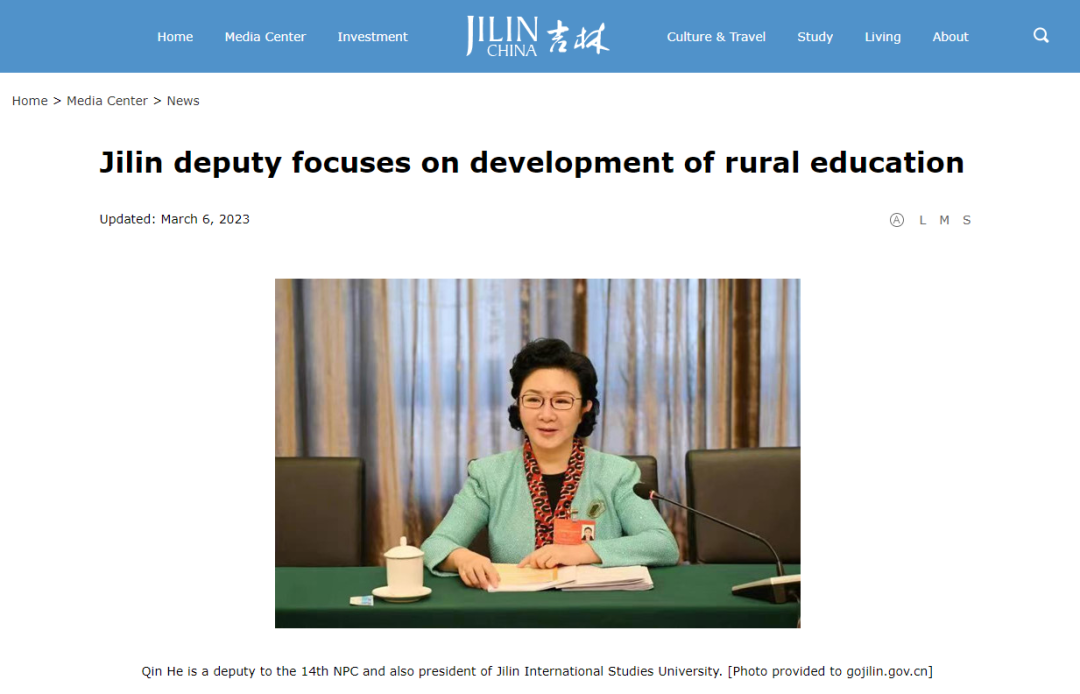
Jilin deputy focuses on development of rural education
Qin He, a deputy to the 14th National People's Congress or NPC, has submitted ambitious motions focusing on education in rural areas, according to local media reports.
According to her motions, it is necessary to take the revitalization of rural education as an important starting point in order to further consolidate the foundation of overall rural revitalization.
Influenced by many factors, rural education in China is said to still face many difficulties and challenges. Of these, three aspects are particularly prominent: First, the overall quality of rural education is not high and the gap with urban schools remains significant. Second, a large number of rural education resources are idle, while, the third is that the level of rural education governance is insufficient.
Qin said that planning and developing rural education should focus on the overall system - and efforts should be made in cultivating teachers in rural areas.
Needs-oriented and problem-oriented training should be strengthened, to help teachers solve practical problems in education and teaching and to comprehensively improve the teaching ability of rural teachers.
She added that the rural education management system should also be improved. It was necessary to conduct a comprehensive evaluation of the financial management, teaching and research management, teacher management and other aspects of rural schools, Qin added.
Combined with the latest situations in rural development and rural education, timely adjustments and optimizations should be made. Qin concluded that through the continuous improvement of relevant management systems, the vitality of rural education would be stimulated effectively
